Disclosure: Some of the links on this page are affiliate links. This means that, at no additional cost to you, I may earn a small commission if you click through and make a purchase. I only recommend products that I personally use or believe will be helpful in emergency preparedness.
An apartment power outage kit does not need to take over your closet. The goal is to keep a small set of practical supplies in one place so you can handle light, phone charging, food safety, water, and basic comfort if the power goes out.
This checklist is built for renters and small spaces. Start with the essentials, then add the optional items that fit your apartment, budget, and local weather.
Apartment Power Outage Kit Checklist
Use this as a simple shopping list. You do not need to buy everything in one day. If you are starting from scratch, begin with light, phone charging, water, and a way to get local alerts.
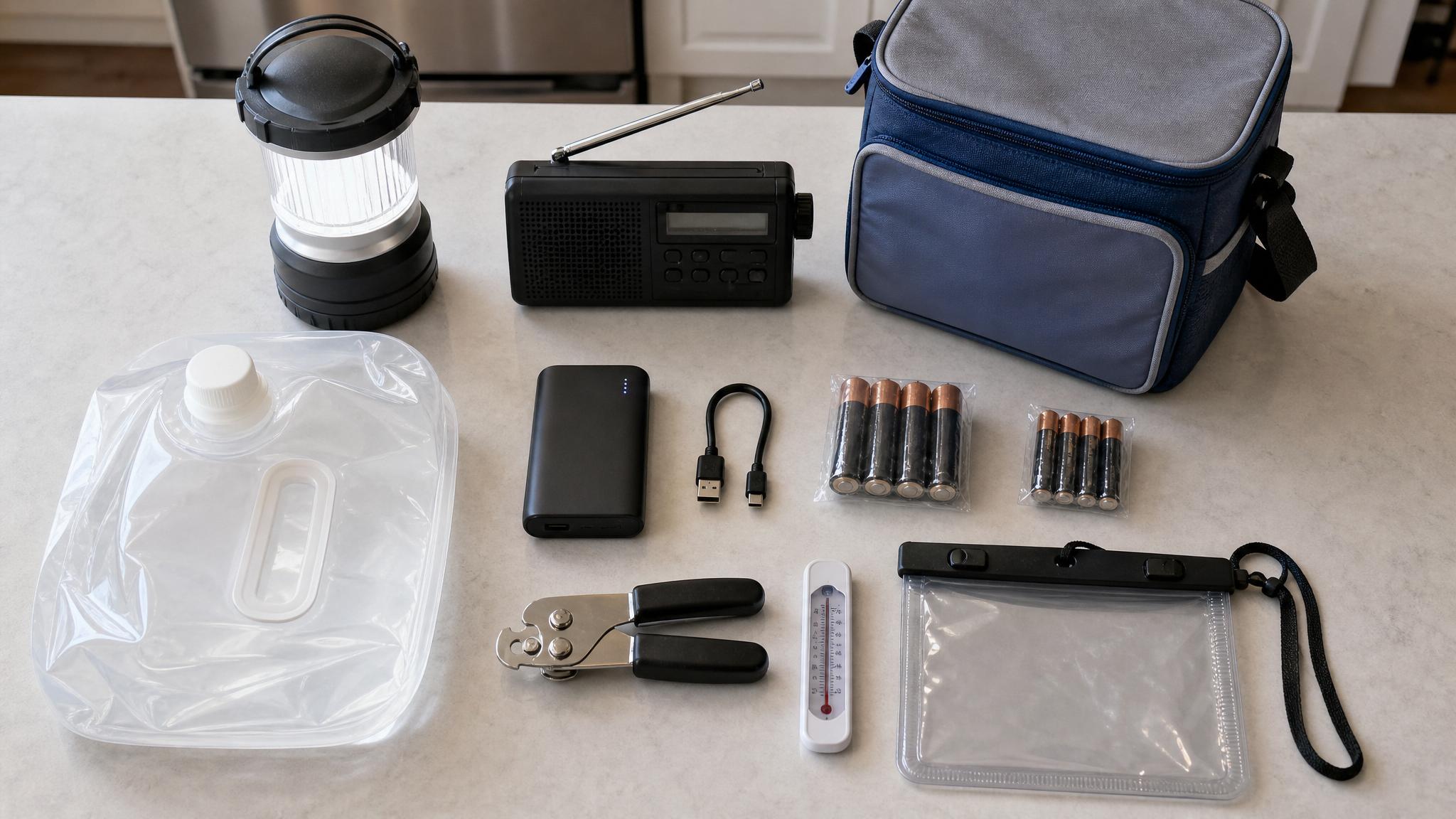
1. LED Lantern
A small LED lantern gives you room light without relying on candles. Look for a lantern that can sit flat on a table and has a handle or hook for hanging.
Good features to look for:
- Multiple brightness settings
- Battery life listed in hours
- Rechargeable battery or common replaceable batteries
- Stable base so it does not tip easily
- Warm or low-light mode for nighttime use
Suggested link: LED lantern for power outages
2. Headlamp or Hands-Free Flashlight
A headlamp is useful in an apartment because it keeps both hands free. That matters if you are walking stairs, checking a breaker box, taking care of pets, or helping kids get settled.
You do not need a fancy outdoor model. A lightweight LED headlamp with simple controls is usually enough.
Suggested link: emergency headlamp
3. Phone Power Bank
A charged power bank helps you keep your phone available for alerts, texts, maps, and calls. For one person, a 10,000 mAh power bank can be enough for shorter outages. For two people or longer outages, 20,000 mAh is a more comfortable starting point.
Look for:
- USB-C input and output
- Clear battery indicator lights
- Enough ports for your household
- A size you will actually keep charged
Suggested link: 20,000 mAh power bank
4. NOAA Weather Radio
A NOAA weather radio gives you another way to receive local weather and emergency information. NOAA Weather Radio broadcasts official warnings, watches, forecasts, and other hazard information from the National Weather Service.
For apartments, choose a compact radio that fits in a drawer or small bin. Battery-powered, hand-crank, and rechargeable models can all work. The best choice is the one you will keep accessible and powered.
Suggested link: NOAA weather radio
5. Extra Batteries and a Simple Battery Organizer
If your lantern, headlamp, or radio uses replaceable batteries, keep extras with the kit. AA and AAA batteries are the most common, but check your exact devices before buying.
A small battery organizer is optional, but it helps keep loose batteries from scattering in a drawer.
Suggested links: AA and AAA batteries and battery organizer
6. Water That Fits Your Space
Ready.gov recommends storing water as part of a basic emergency kit. In an apartment, the challenge is usually space. You can use a mix of standard water jugs, bottled water, and collapsible water containers.
Small-space storage ideas:
- Store a few gallons under a bed
- Keep a collapsible water container in a closet
- Put one shelf-stable water case in a pantry or utility area
- Rotate stored water on a schedule you can remember
Suggested link: collapsible water container
7. Shelf-Stable Food and a Manual Can Opener
Choose foods you can eat without much cooking. This is especially helpful if your apartment uses an electric stove.
Good starting options include:
- Peanut butter or nut butter
- Crackers
- Shelf-stable tuna, chicken, or beans
- Granola bars
- Applesauce cups
- Trail mix
- Shelf-stable milk or protein drinks
If you store canned food, keep a manual can opener in the same bin.
Suggested link: manual can opener
For a more complete food plan, use the 7-day emergency food box for one person as your next step.
8. Small Cooler and Appliance Thermometer
The Red Cross recommends planning for coolers and ice during longer outages and keeping a thermometer in your refrigerator, freezer, or cooler to monitor food temperature.
For an apartment, a compact cooler is usually easier to store than a large hard-sided cooler. A simple refrigerator/freezer thermometer is inexpensive and helps you make better decisions after the power comes back.
Suggested links: small cooler for power outages and fridge/freezer thermometer
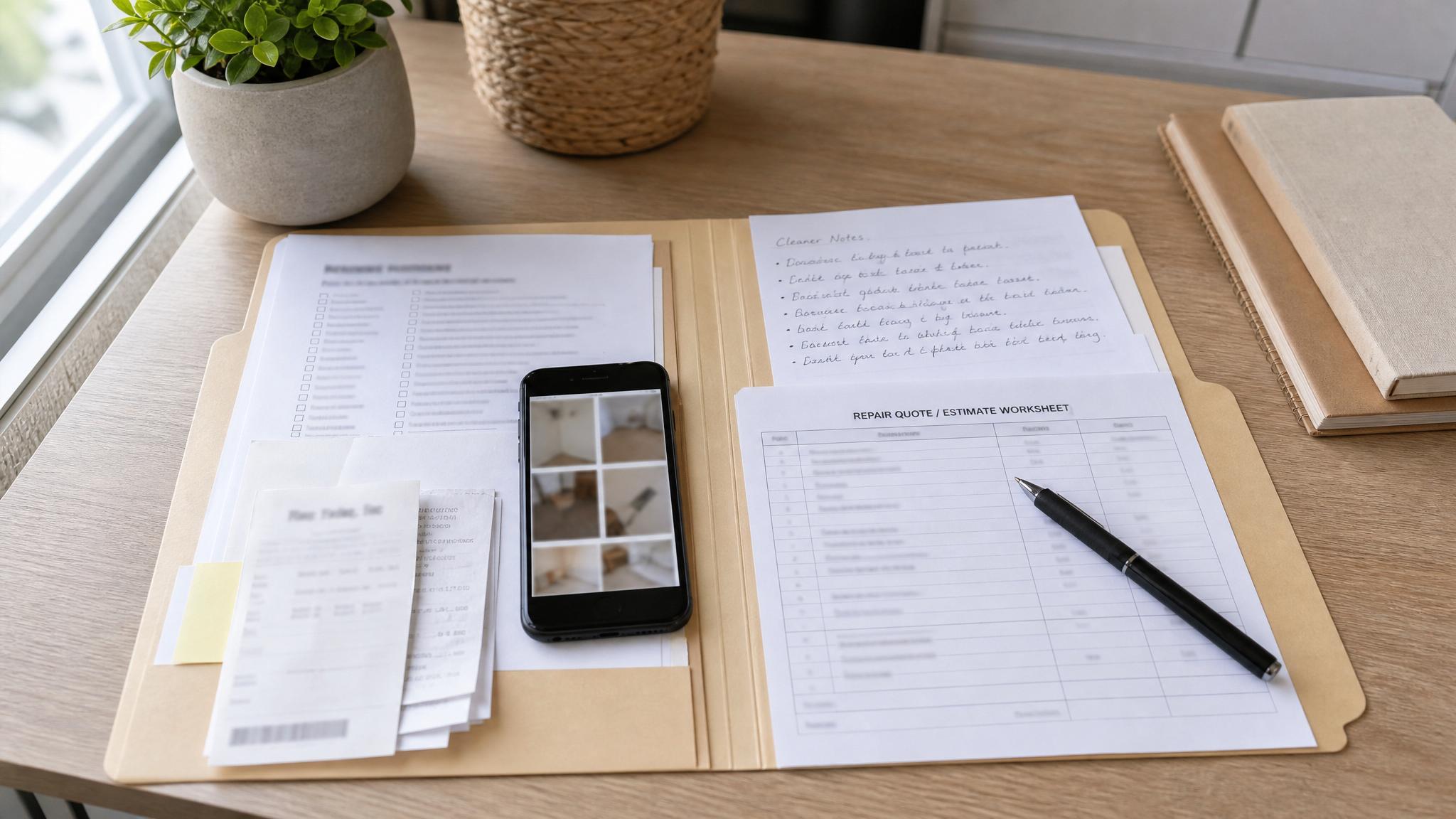
9. Paper Contact List and Document Pouch
Keep a small paper contact list in your power outage kit. Include household members, nearby family or friends, your property manager, utility company, doctor or pharmacy, and pet care contacts if needed.
A waterproof document pouch is useful for copies of your ID, renter insurance details, lease information, and emergency contacts.
Suggested link: waterproof document pouch
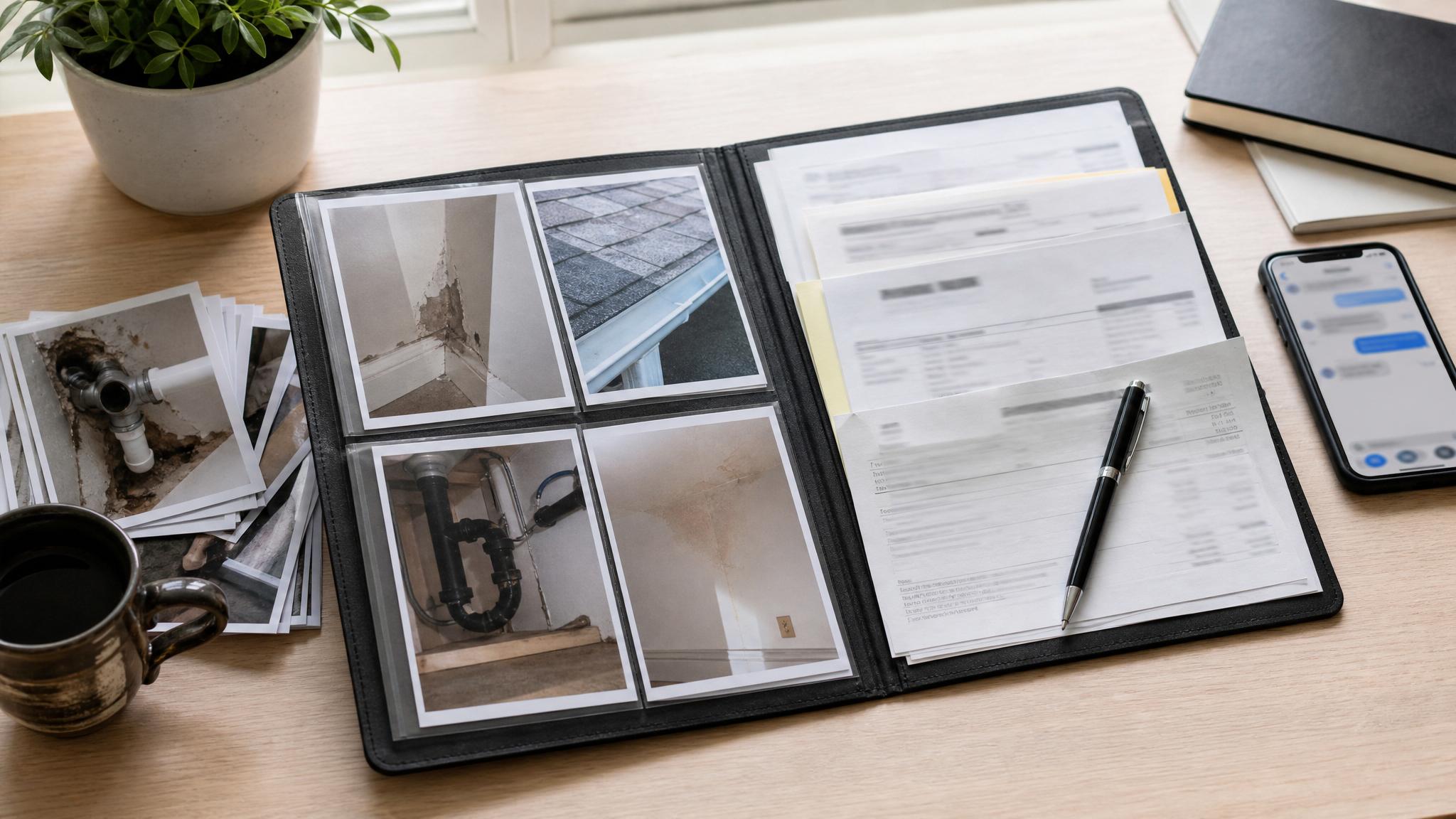
If you rent, you may also want to review these photos every renter should take before an insurance claim.
What Not to Use Indoors
Apartment power outage planning should stay simple and safe. Do not use generators, outdoor grills, camp stoves, charcoal burners, or fuel-burning heaters indoors. They are not apartment-safe indoor backup options.
If your apartment gets too hot or too cold, plan where you could go instead. That might be a friend’s home, a cooling or warming center, a library, or another safe public place.
Small-Space Storage Plan
The easiest system is one clear bin plus one charging spot.
Put these items in the bin:
- Lantern
- Headlamp
- Extra batteries
- NOAA radio
- Manual can opener
- Paper contact list
- Document pouch
- Shelf-stable snacks
Keep these items near an outlet:
- Power bank
- Charging cable
- Rechargeable lantern, if you use one
Then store water wherever it realistically fits. Under-bed storage, a hall closet, and pantry floor space are often better than trying to keep everything in one bin.
Budget Starter Kit
If you only want to buy a few things this week, start here:
- LED lantern
- Power bank
- NOAA weather radio
- Manual can opener
- Extra water
That small setup covers the most common power outage needs: light, phone charging, local information, basic food access, and hydration.
Apartment Power Outage Kit FAQ
What should be in an apartment power outage kit?
An apartment power outage kit should include light, phone charging, local alerts, water, shelf-stable food, a manual can opener, basic first aid, a paper contact list, and any personal items your household needs.
Are candles safe during a power outage?
Flashlights and LED lanterns are usually a safer choice than candles, especially in apartments with pets, kids, shared walls, or limited space. If you do use candles, never leave them unattended.
How much water should renters store?
Ready.gov recommends storing one gallon of water per person per day for several days. If you have limited space, start with what you can store safely and build from there.
Do I need a generator for an apartment?
Most renters should not plan around a generator unless their building has specific safe outdoor space and clear rules for it. Never use a generator indoors, on a balcony, or near windows.
What is the first thing to buy for a power outage kit?
Start with an LED lantern, a phone power bank, and stored water. Those three items solve the most immediate problems for many short apartment outages.
Final Takeaway
Your apartment power outage kit should be small enough to store and simple enough to maintain. Start with the basics, keep everything in a predictable spot, and check your batteries and power bank once a month.
A calm, practical kit is the goal. You do not need a garage full of supplies to be more prepared than you were yesterday.