Disclosure: Some of the links on this page are affiliate links. This means that, at no additional cost to you, I may earn a small commission if you click through and make a purchase. I only recommend products that I personally use or believe will be helpful in emergency preparedness.
A 7-day emergency food box for one person does not need to be fancy. The goal is simple: keep enough shelf-stable food in one clearly marked place so you can eat basic meals if the power is out, stores are closed, or you need to stay home for a few days.
This is not about building a bunker pantry or buying specialty survival food. It is about choosing normal foods you will actually eat, rotating them before they expire, and making sure you have meals that work with limited cooking.
What Should Go in a 7-Day Emergency Food Box for One Person?
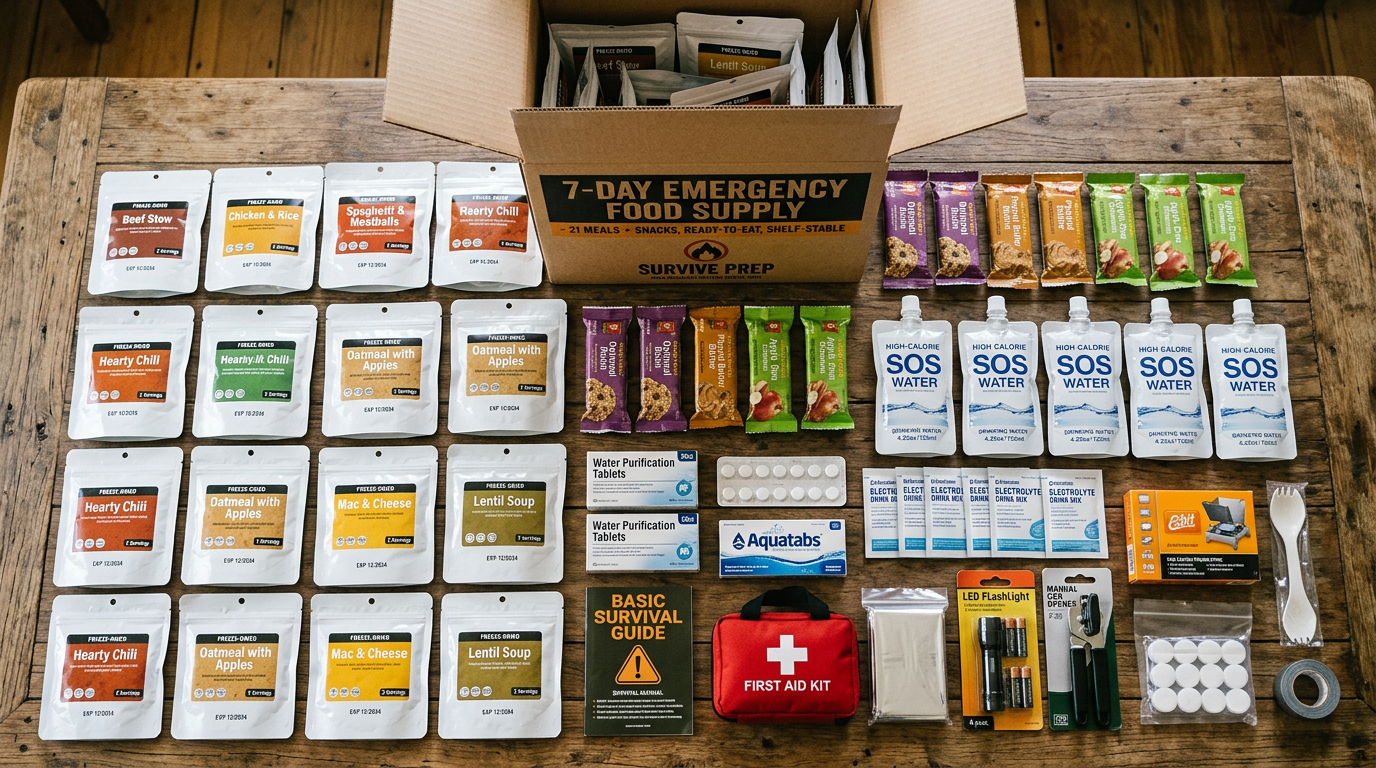
Plan for simple breakfasts, lunches, dinners, snacks, and drinks. You want food that is shelf-stable before opening and easy to prepare with bottled water, a manual can opener, and a small emergency stove if you use one.
A practical target is 7 breakfasts, 7 lunches, 7 dinners, and 14 small snacks. You can repeat meals. In an emergency, predictable and easy is better than complicated.
Simple 7-Day Food Box Checklist
| Category | What to Pack | Why It Helps |
|---|---|---|
| Breakfasts | Instant oatmeal packets, granola, shelf-stable breakfast bars | Fast, familiar, and easy to portion |
| Lunches | Canned tuna, canned chicken, crackers, peanut butter, canned soup | No-fuss meals with protein |
| Dinners | Instant rice, couscous, pasta pouches, canned beans, lentils, chili, vegetables | More filling meals for the end of the day |
| Snacks | Trail mix, dried fruit, jerky, nuts, crackers | Quick calories when cooking is inconvenient |
| Flavor helpers | Salt, pepper, taco seasoning, bouillon, hot sauce packets, bottled lemon juice | Keeps stored food from feeling bland |
| Drinks | Bottled water, electrolyte packets, instant coffee or tea | Supports hydration and normal routines |
A Sample One-Person Food Box
- 7 instant oatmeal packets
- 7 shelf-stable breakfast or granola bars
- 4 cans tuna or chicken
- 4 cans beans or lentils
- 3 cans soup or chili
- 2 cups instant couscous or instant rice
- 2 cans vegetables
- 1 jar peanut butter
- 1 box crackers
- 7 to 14 snack servings
- Small seasoning kit
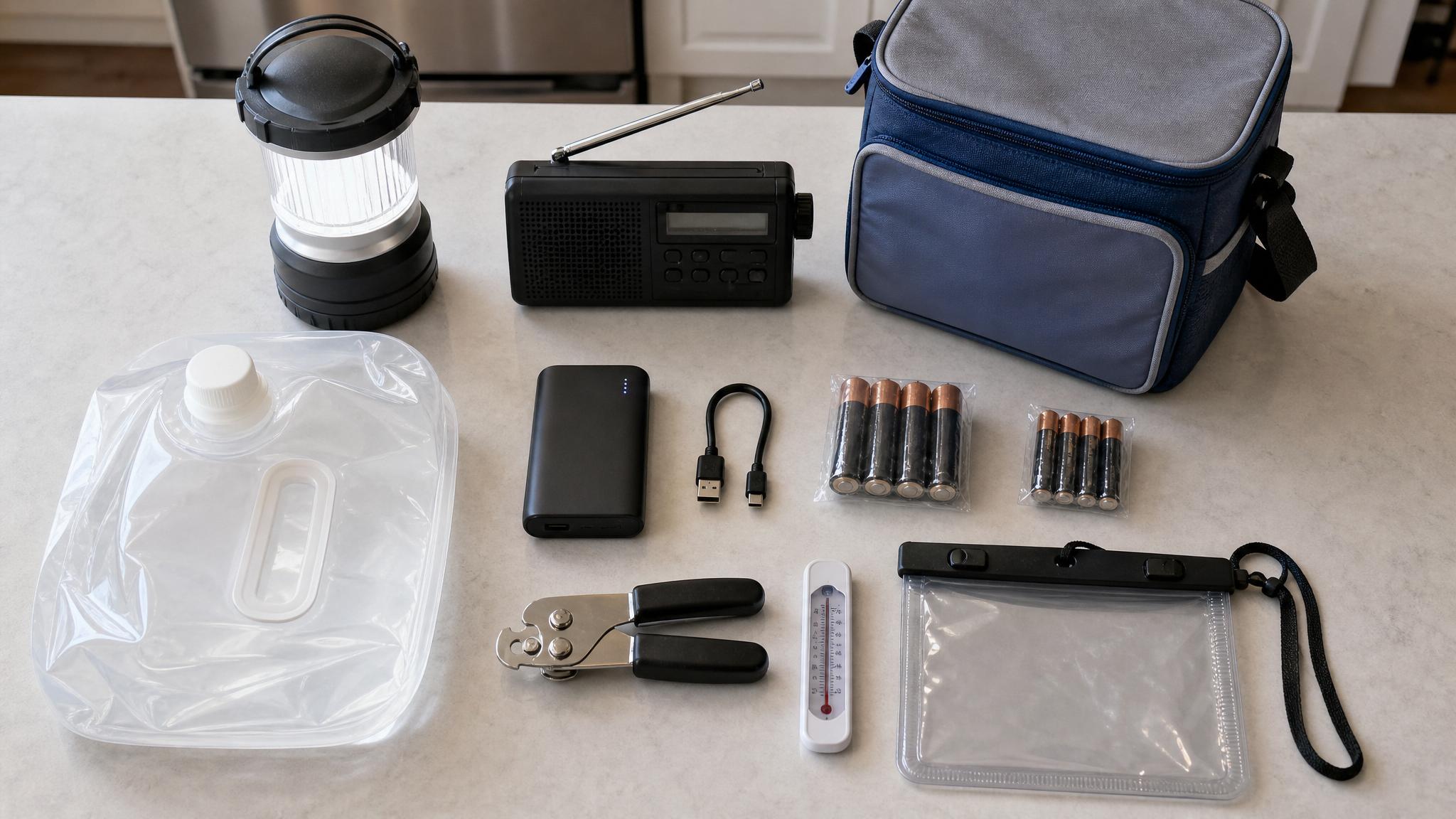
- Manual can opener and disposable plates or bowls
If you want one easy dinner idea for this box, add the ingredients for this pantry couscous lentil bowl. It uses compact ingredients and cooks quickly, which helps if fuel is limited.
Do Not Forget Water
Food planning only works if you also plan for water. A common emergency planning baseline is one gallon of water per person per day for drinking and basic hygiene. For one person for 7 days, that means 7 gallons as a starting point.
If storage space is tight, store what you can and make a note to add more before severe weather season. Keep water near the food box or label both areas so they are easy to find.
How to Store the Box
Choose a cool, dry location that is easy to reach. A clear tote, sturdy pantry bin, or lidded box works well. Label it with the month and year you packed it.
Put the heaviest cans on the bottom and lighter items on top. Keep a printed inventory taped inside the lid so you can check dates quickly.
How Often Should You Rotate It?
Check the box every 6 months. Move foods with closer dates into your regular meals and replace them with fresh pantry items. This keeps the box useful without wasting money.
It also helps you learn what you actually like. If no one wants to eat a certain canned meal on a normal weeknight, it probably should not be the star of your emergency box either.
Quick Packing Tips
- Pick foods you already know how to prepare.
- Include at least a few no-cook meals.
- Choose pop-top cans only if you trust the lids; still pack a manual can opener.
- Keep seasonings small but useful.
- Write simple meal ideas on an index card and store it in the box.
A good 7-day emergency food box should make a hard week easier, not more stressful. Start with normal shelf-stable foods, keep the plan simple, and rotate it like part of your everyday pantry.