Disclosure: Some of the links on this page are affiliate links. This means that, at no additional cost to you, I may earn a small commission if you click through and make a purchase. I only recommend products that I personally use or believe will be helpful in emergency preparedness.
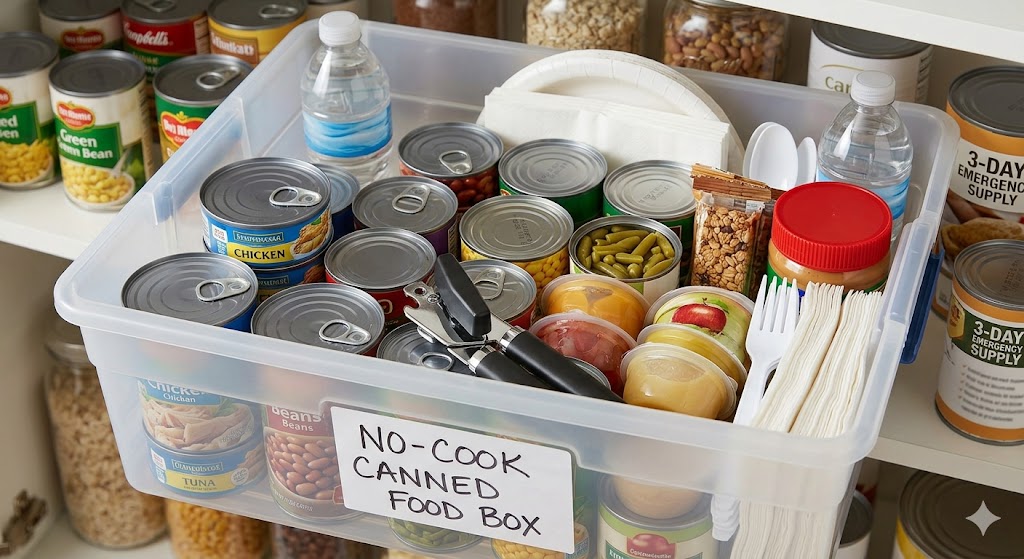
A no-cook canned food box is one of the easiest preparedness projects you can finish in an afternoon. It gives you a small, organized supply of meals you can eat during a power outage without using the stove, microwave, oven, or refrigerator.
The goal is not to build a dramatic survival bunker. It is to make sure you can feed your household for a short outage with food that is familiar, shelf-stable, and easy to open.
What Is a No-Cook Canned Food Box?
A no-cook canned food box is a small bin, crate, or pantry shelf section filled with foods that can be eaten straight from the package. You can warm them if power and safe cooking options are available, but you do not have to.
This kind of box is especially useful for apartment dwellers, families who do not own a camp stove, and anyone who wants a simple backup food plan without overthinking it.
Start With Simple Meal Building Blocks
Think in small meals instead of random cans. A can of beans is helpful, but beans plus crackers, fruit, and water feels more like lunch. Building meals also makes it easier to see what you are missing.
| Meal piece | Good shelf-stable options |
|---|---|
| Protein | Pull-tab tuna, canned chicken, canned beans, lentils, peanut butter |
| Carbs | Crackers, tortillas, ready-to-eat rice cups, granola bars |
| Fruit or vegetable | Canned fruit, applesauce cups, canned corn, green beans, carrots |
| Flavor | Salsa packets, hot sauce, shelf-stable dressing, seasoning packets |
| Drink | Bottled water, shelf-stable milk boxes, electrolyte packets |
A Basic 3-Day No-Cook Box
Use this as a starting point for one adult. Adjust for children, appetites, dietary needs, and the foods your family actually eats.
- 6 to 9 pull-tab protein cans or pouches
- 3 cans of beans or lentils
- 2 boxes of crackers or shelf-stable tortillas
- 6 fruit cups, applesauce cups, or cans of fruit
- 3 to 6 canned vegetables
- 3 to 6 granola bars or snack bars
- 1 jar of peanut butter or another shelf-stable spread
- Comfort items like instant coffee, tea bags, hard candy, or shelf-stable cocoa mix
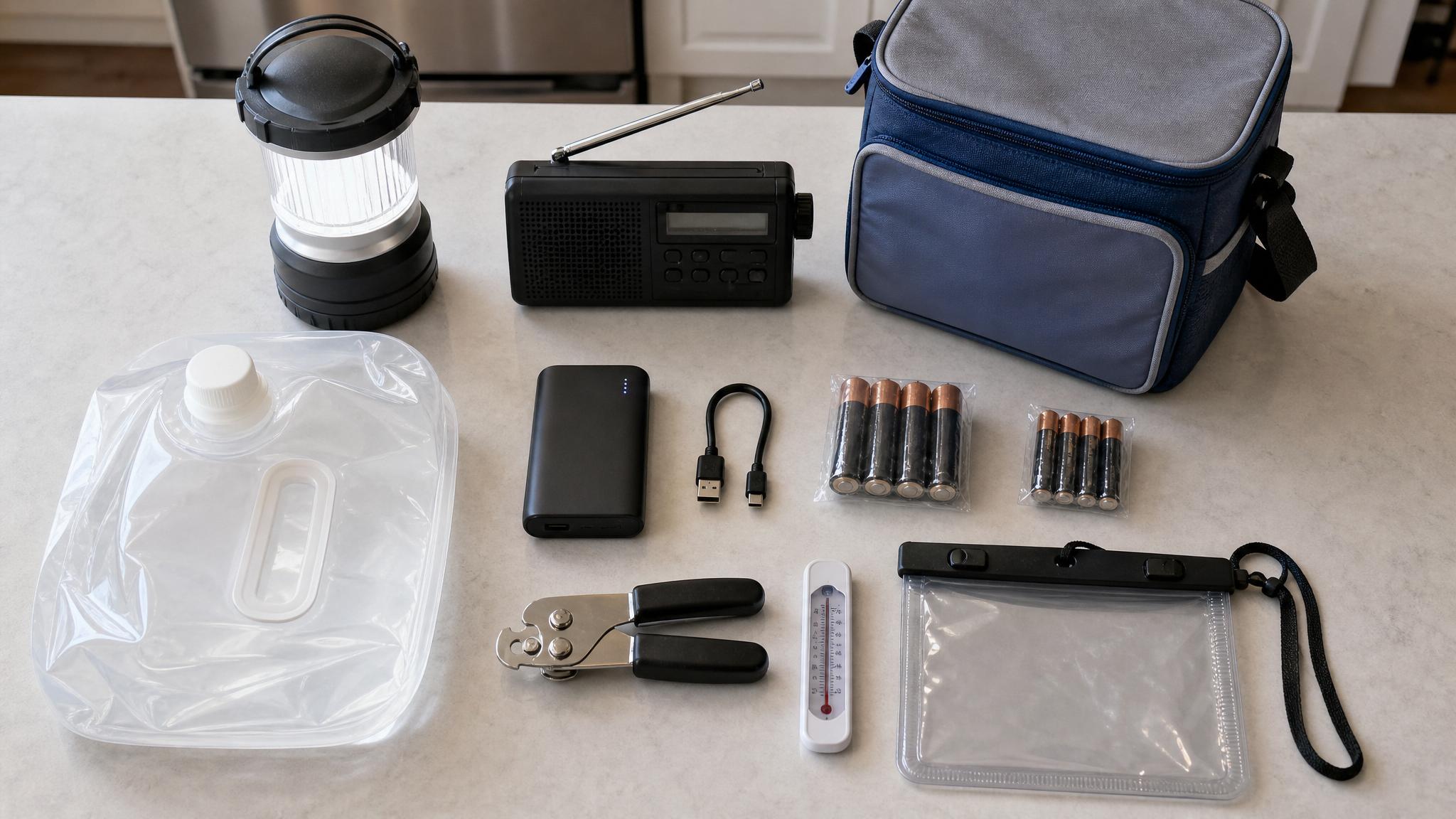
- A manual can opener, disposable utensils, napkins, and trash bags
Pack It So You Can Actually Use It
Store the box where you can reach it in the dark. A lower pantry shelf, hall closet, or kitchen cabinet works well. If you use a lidded bin, label it clearly and do not bury it behind holiday decorations.
Choose pull-tab cans when you can, but still include a manual can opener. Power outages have a way of revealing exactly which can does not have a pull tab.
Quick No-Cook Checklist
- Pick foods your household already likes.
- Group items into simple meals, not just loose cans.
- Include water and shelf-stable drinks.
- Add a manual can opener and basic utensils.
- Check dates every 3 to 6 months.
- Rotate older items into regular meals before they expire.
Do You Need to Cook Any of It?
No. That is the point of this box. Many canned foods taste better warmed, but they are already cooked during processing. If the can is intact, the food is within date, and it looks and smells normal when opened, it can usually be eaten without heating.
When in doubt, follow the package directions and use common sense. Do not eat from cans that are leaking, deeply dented, bulging, badly rusted, or smell off when opened.
Make It Easier With a Pantry Recipe Plan
Your no-cook box is for the moments when cooking is not realistic. It is also smart to keep a few shelf-stable meals that can be cooked quickly when you do have a safe heat source. For example, a simple shelf-stable taco rice skillet uses canned and dry pantry ingredients and turns them into a filling dinner.
That gives you two layers of backup: food you can eat with no power at all, and pantry meals you can cook when conditions allow.