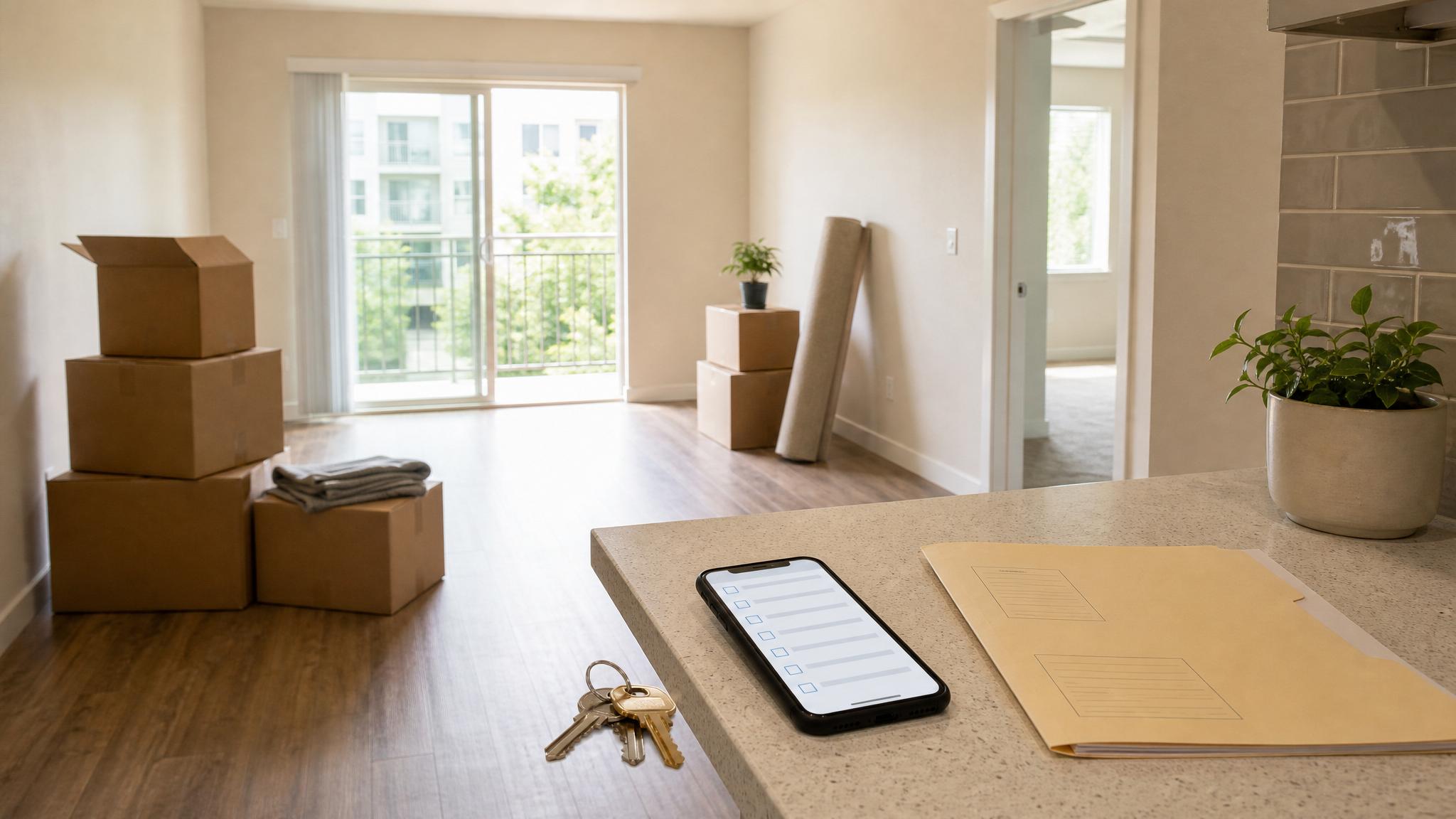
Moving out is easier when your photos, receipts, and handoff notes are not scattered across your camera roll. This move-out checklist for renters gives you a calm way to document the condition of your apartment before you leave.
This is not about expecting a problem. It is about making future-you grateful that everything is organized.
Disclosure: This article may link to products or resources from The File Cabinet. If you buy through one of those links, Ready Prep Lists may earn from qualifying purchases or related sales at no extra cost to you.
Before you take photos
Start with a quick setup. You do not need special equipment.
- Use daylight when possible.
- Take wide photos before close-ups.
- Film a slow walkthrough from the doorway of each room.
- Keep photos, videos, receipts, and notes in one folder.
- Save a backup outside your phone camera roll.
Practical Tip: If your phone lets you search photos by date or location, keep that setting on until you finish your move-out documentation.
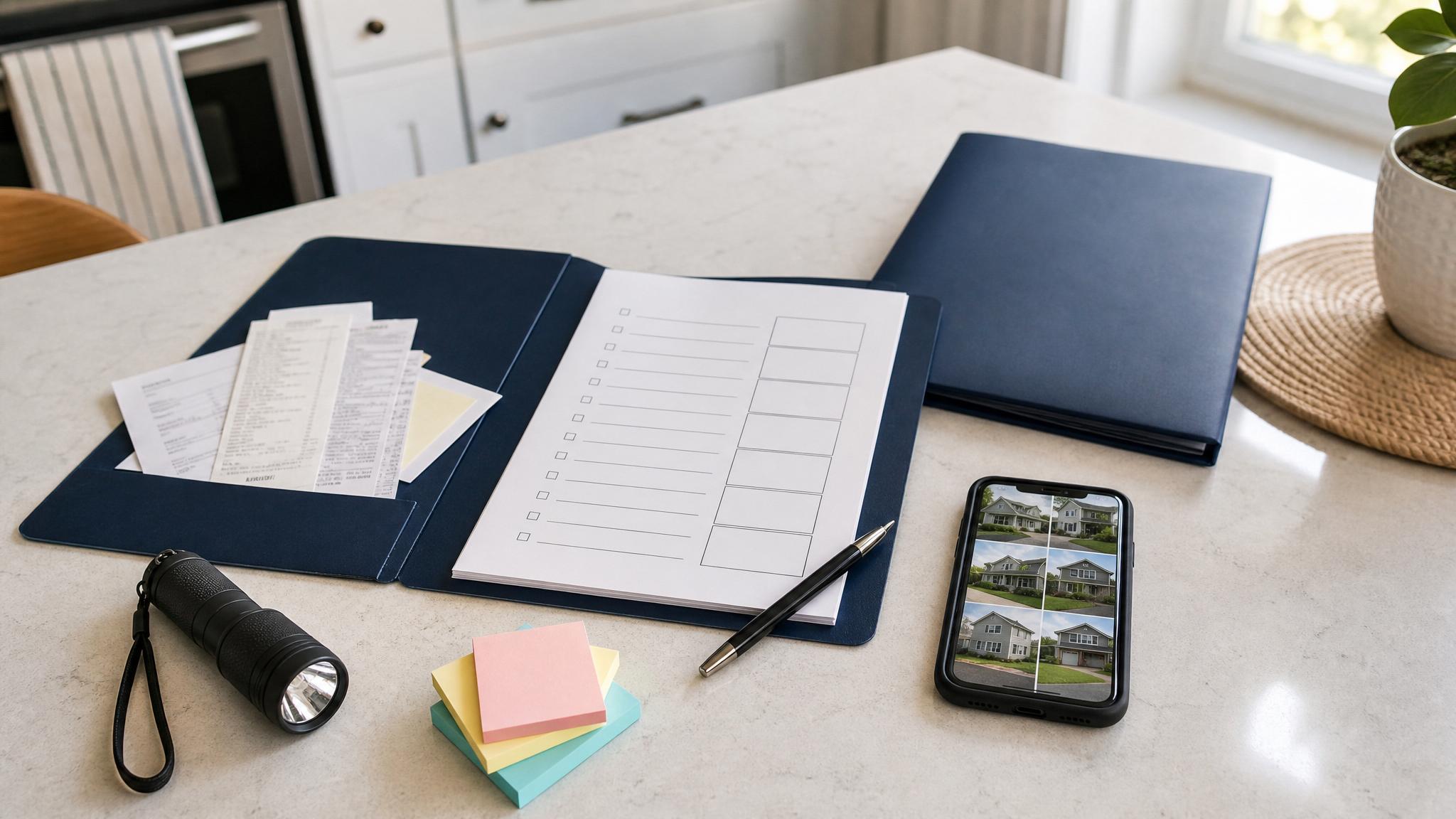
Photograph every room from wide angles
For each room, stand in the doorway and take one wide photo. Then take photos from the opposite corner if you can.
Capture:
- Walls
- Floors
- Ceilings
- Doors and trim
- Windows and blinds
- Light fixtures and ceiling fans
- Closets and storage areas
Wide shots help show the overall condition of the room. Close-ups are useful too, but they are easier to understand when you also have a full-room photo.
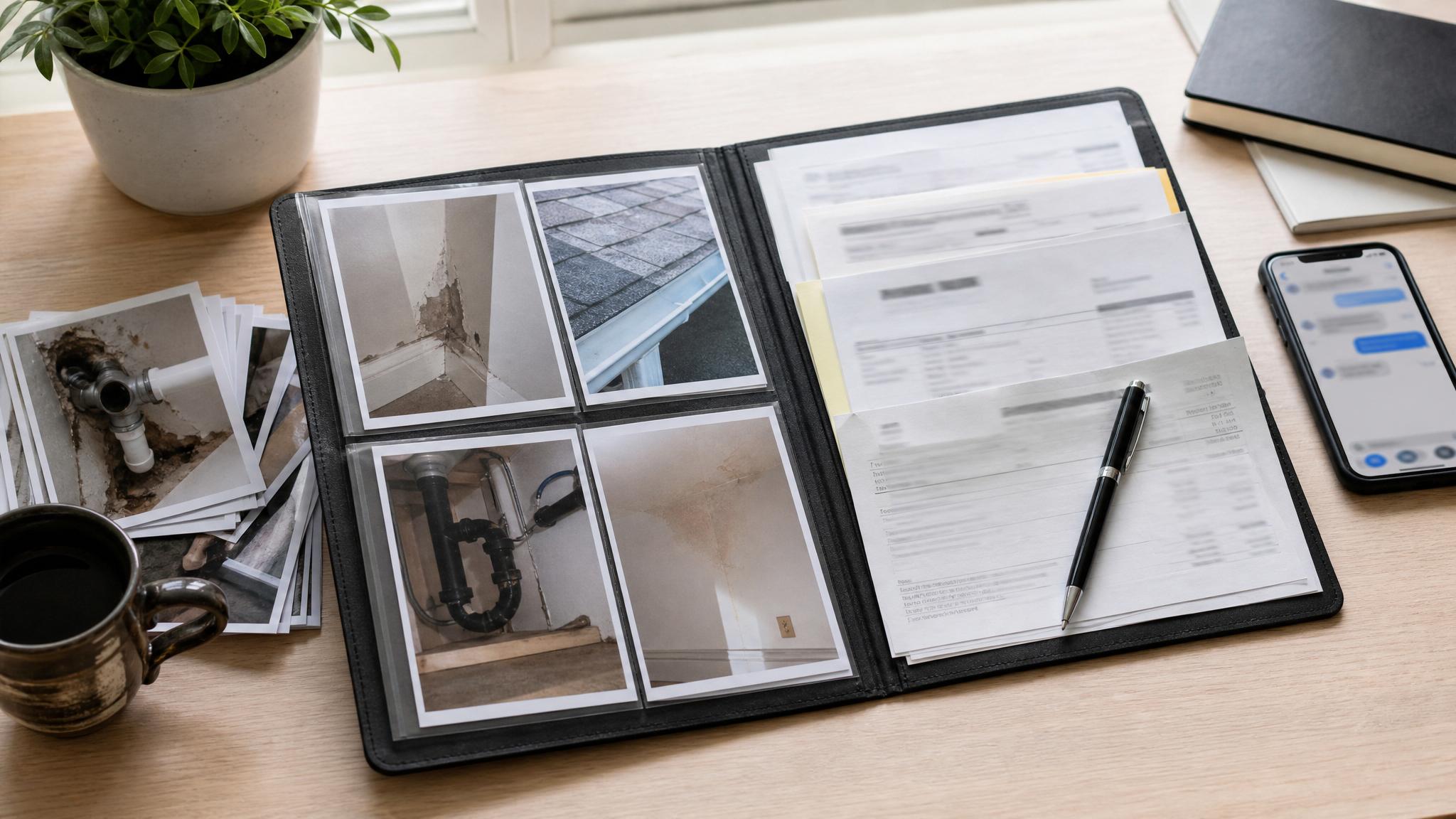
Take close-ups of existing damage
Walk through the apartment slowly and photograph anything that looks worn, stained, chipped, cracked, scratched, loose, or missing.
Common examples include:
- Wall scuffs or nail holes
- Carpet stains or frayed areas
- Scratched floors
- Cracked tiles
- Damaged blinds
- Loose handles
- Dented appliances
- Water stains under sinks
Do not edit photos in a way that changes what they show. If you need to brighten a dark photo for your own folder, keep the original too.
Document appliances, sinks, and fixtures
Kitchen and bathroom photos are worth taking carefully because these areas have lots of small details.
In the kitchen, photograph:
- Refrigerator and freezer, inside and outside
- Stove, oven, and microwave
- Dishwasher, if there is one
- Sink, faucet, counters, and cabinets
- Drawers and shelves
In the bathroom, photograph:
- Sink and faucet
- Toilet
- Tub or shower
- Mirror and medicine cabinet
- Cabinets and drawers
- Floor, walls, and any visible caulk or grout issues
Practical Tip: Open cabinets, drawers, the fridge, and the oven for a second photo. It is easy to forget the inside areas.
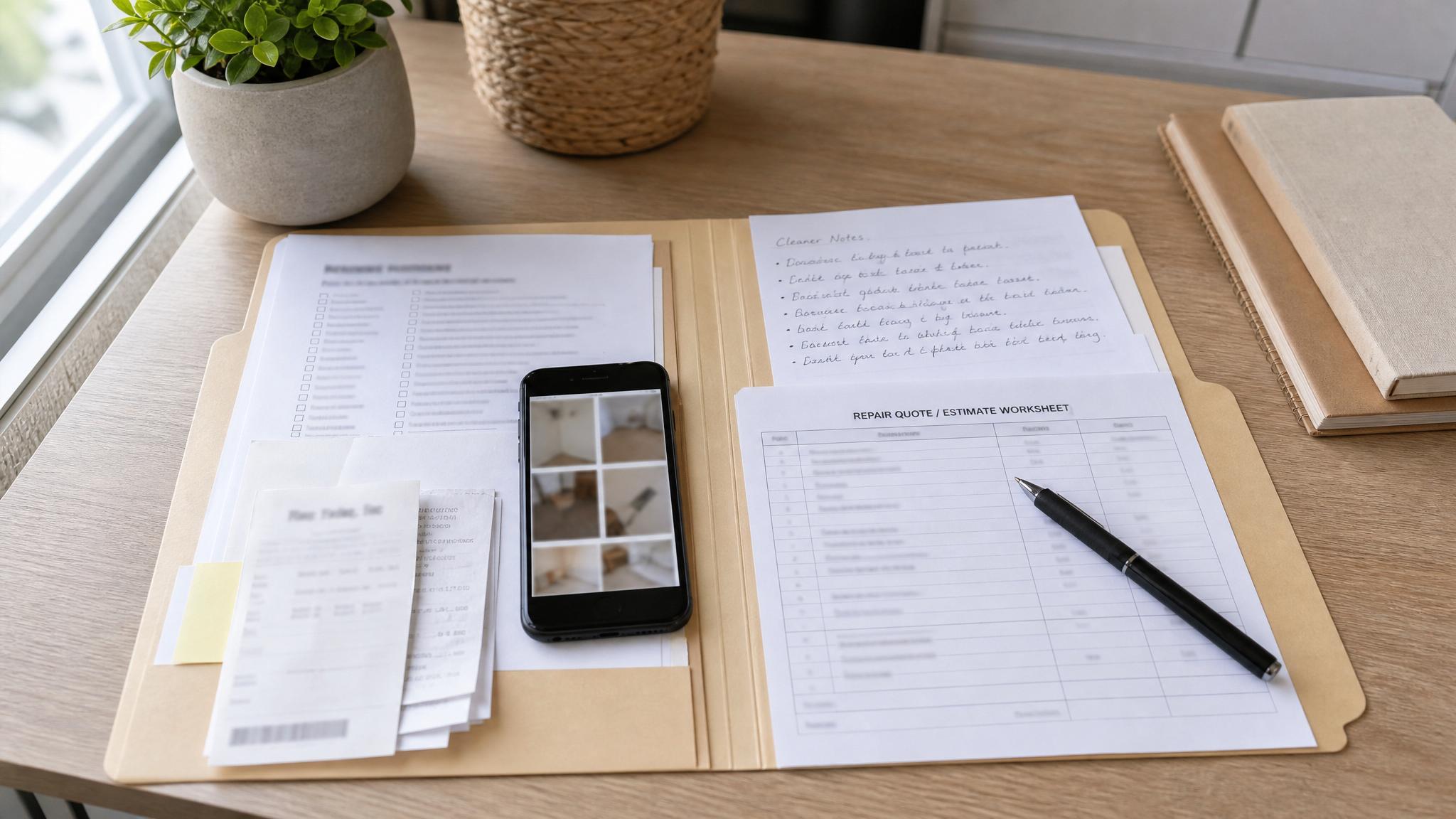
Save cleaning and repair proof
If you cleaned, replaced items, patched small holes, or paid for services, save those details in the same folder as your photos.
Useful records may include:
- Cleaning receipts
- Carpet cleaning invoice, if required
- Supply receipts
- Repair receipts
- Before-and-after photos
- Messages about approved repairs or instructions
You do not need to make this complicated. A simple folder called “Move-Out Proof” is enough.
Track keys, access cards, and final handoff
Before you leave, make a note of how you returned access items.
This may include:
- Apartment keys
- Mailbox keys
- Parking passes
- Garage openers
- Building fobs
- Gate cards
- Storage unit keys
Write down the date, time, method, and person or place you returned them to. If you received a receipt or confirmation, save it.
Keep moving damage separate
If you also had damaged furniture, missing boxes, or mover-related issues, make a separate list. Mixing moving damage with apartment condition notes can make everything harder to review.
For each item, write down:
- Item name
- Box number, if known
- What happened
- Photos or video location
- Estimated value
- Repair or replacement quote, if available
- Messages with the moving company
This is where a dedicated moving damage tracker can help.
Download the free Move-Out Photo Shot List
If you want a simple printable version, download the free Move-Out Photo Shot List from The File Cabinet: https://payhip.com/b/Ak0OH
It includes:
- A room-by-room photo checklist
- Move-out proof reminders
- Key handoff notes
- Moving damage reminders
- Letter and A4 PDF versions
Use it as a quick guide while you walk through the apartment.
When to use the full renter documentation bundle
The free checklist is enough for a simple move-out photo pass. If you want everything organized in one place, the renter bundle is built for the bigger picture.
The Renter Move-Out + Moving Proof Bundle (https://payhip.com/b/6swxQ) is designed to connect:
- Move-out condition notes
- Move-in and move-out room checklists
- Security deposit documentation
- Moving damage records
- Receipts and handoff notes
Prefer Etsy? The Move-Out Evidence Kit is also available in The File Cabinet Etsy shop: Security Deposit Refund Kit / Renter Move-Out Evidence Kit on Etsy.
It is an organizational tool, not legal or insurance advice. It does not guarantee any refund, claim approval, or outcome. It simply helps you keep your records cleaner.
Quick FAQ
How many photos should I take before moving out?
Take enough photos to show every room clearly. A good starting point is one wide photo from each doorway, one wide photo from the opposite side, and close-ups of anything damaged, cleaned, repaired, or unusual.
Should I take a video walkthrough too?
A video walkthrough can be helpful because it shows how rooms connect. Move slowly, use good lighting, and still take still photos of important details.
What should I do with the photos after moving out?
Save them in a folder with the move-out date. Back them up somewhere outside your phone, such as cloud storage or a computer. Keep receipts, messages, and handoff notes with the same folder.
Is this legal advice?
No. This checklist is for general organization only. Lease terms, local rules, deadlines, and documentation requirements can vary. Check your own documents and ask a qualified professional if you need advice.
Final takeaway
A move-out checklist for renters does not need to be complicated. Take wide photos, capture close-ups, save receipts, and keep handoff notes together.
The goal is simple: make your records easy to find if you ever need them.